Showing posts with label DandD Five. Show all posts

Friday, April 19, 2013

How to pick your next rpg campaign or system


Castle Falkenstein what a great game. Should it be next?

If your anything like me you love rpg's. You have a mass of them, you read and like and want to play lots of different ones. So when it comes to your next game it can be problematic and present a difficulty picking what to play. This can be further exacerbated by our gaming friends, their likes and dislikes and essentially their level of trust in you and your game management. Something  John Harper observed.

So how do you pick a game? How do you make a decision? And how will you know, beyond a shadow of a doubt, that it is the right one?
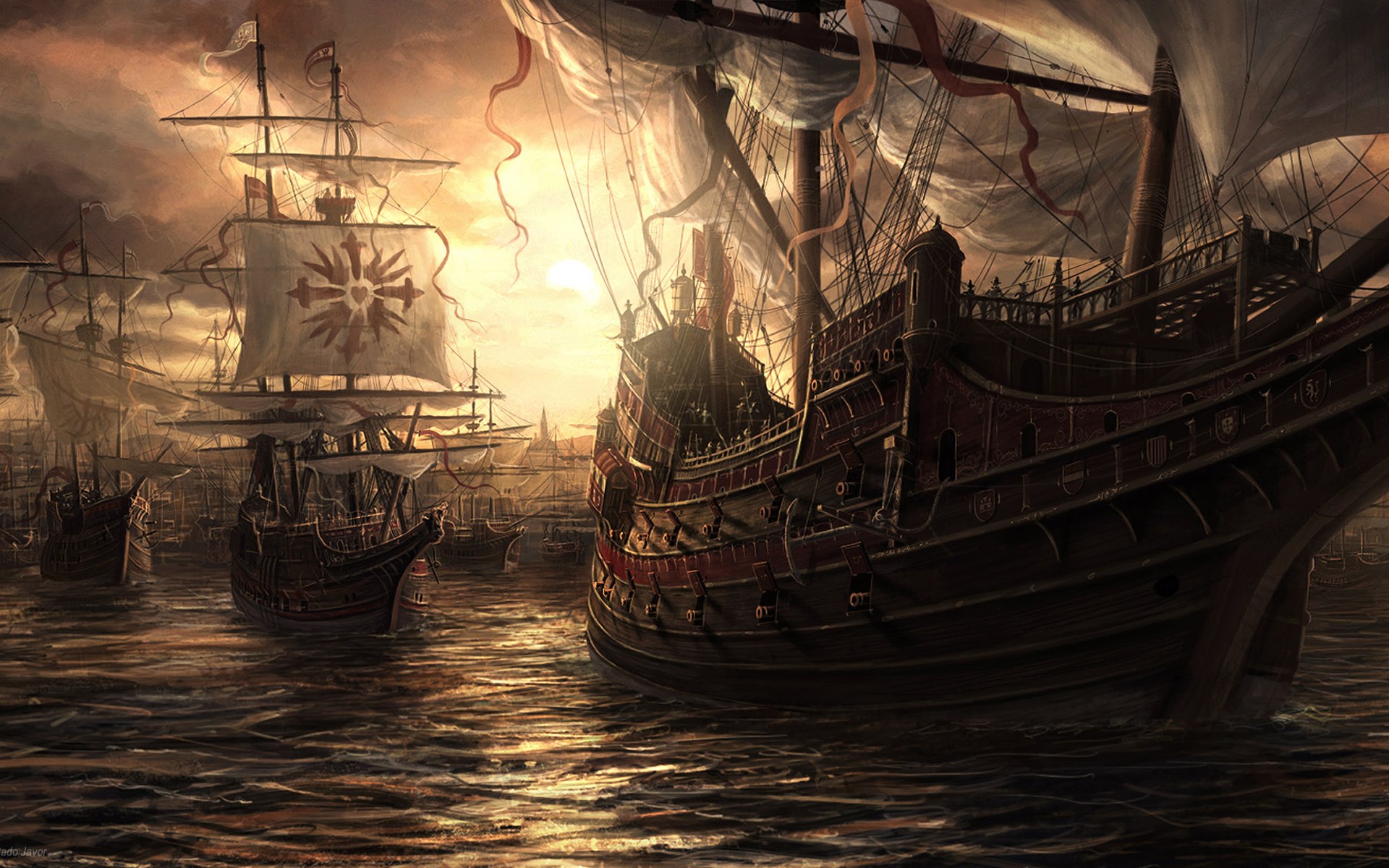
Or do I go with an Age of Sail game? Flashing blades anyone?
Your lucky in life when things are black or white. So its easy to make decisions. A train is speeding towards you. You want to live. Jump out of the way and you know unequivocally you have made the right decision.

Or maybe retro scifi? Sabers and Lazers any one?
But when it comes to gaming choices its less clear. should you play a D&D or 7th Sea? Should you play this with the original rule set or Savage Worlds?

Many of these types of decisions are ambiguous. Sometimes both decisions would have been right or wrong… to some extent. If we wait for absolute certainty before acting then we may never act. So that mean your likely to miss out on some good gaming opportunities. Fun times with friends.

Its time to realize sometimes there are no 'right' decisions, only different or alternate decisions. Trying to make the 'right' decision assumes that life is always simple or even simplistic. After all this is just your hobby time why anguish over it.  However some people - I include myself - respond to decision making time like a rabbit snared in the hunters spotlight.

Don't create unnecessary anxiety by worrying about what to do. There are five common traps to watch for:
  1. Wanting too much certainty before acting. Perfectionist types with simplistic ideas of right and wrong go for this one. They don't feel it is reasonable to act on a decision while still having doubts about it. They want a certificate to come through the letterbox telling them the right decision has been reached and officially approved. As this doesn't happen, their minds go round and round in circles and they actually think too much. 
  2. Believing a decision can only be valid if ratified by other people. This approach often comes out of fear of making an entirely independent decision. It may be a sign of reluctance to "rock the boat" or be responsible for a sub-optimal/bad outcome. 
  3. Constantly making the same mistakes because of failure to learn from the past. If you know that Rolemaster doesnt work for the group due to its complexity, or that FATE is something your players cant understand, or Runequest is too off-beat for the players, then recognise these patterns and incorporate them into your decision making. 
  4. Making emotional decisions based on a whim. Try not to make an entirely emotionally based decision type to understand the context of the decision and where it will lead. Interestingly current research make this type of decision making less of a "trap" then was previously thought and honestly in the context of role playing games this could be a fine way to go. Your passion may just carry the day and the game.  
  5. Not making a decision is a decision. The trouble is the which game which system 'problem' your trying to solve isn't maths. Your treating the problem of what to do for role playing as if it were algebra. You have to not sweat the small stuff. Moreover its preventing you from getting what you want from your roleplaying sessions. Its your hobby time and you should strive to making as enjoyable as possible. 
Ohh yeah THAT's what I'm talking about!!!
So what to do? First off don't sweat it. Don't get worked up. You may even have to give yourself time away form the decision. If your lucky enough to have a secondary GM in the group let them have the stage for however long they want need it. Or play board games for a while. If you dont want to do this then make sure you have something prepped for the next session of what ever it is you are playing. focus on combat you can rarely go wrong. Do a Chandler and have a revolver shoot through the door. The essence is don't worry about what it is - just have something. That will do for now and lets you enjoy your friends and your hobby time.

Don't feel locked in to the current game or system your running for your group. If you have to change let them know there is change coming. There is an unrealistic expectation on the part of many players in rpg's - I find particularly prevalent in people who don't or rarely run games. The Long Term Campaign. Its sort of unrealistic to expect this to just happen. Even with an entire Adventure Path, framework in which we have fun. The goal is fun. The secondary goal is fun adventuring and exploring in game drama.
She needs saving get to it!!!
Mega Dungeon or Packaged Campaign it just may not click for you or for that matter a number of the players. When one works its the nirvana of role-playing and is a truly great experience. It is NOT however the ONLY valid from of role-playing. The emphasis of any session should be on  getting together with friends to have fun over a game. Lets examine that and thing on our roleplaying experiences in the past...the game provides a

Don't dither; trust your gut instincts! When decision making gets tough – trust your gut instincts. Research published in 'Current Biology' shows, in some instances snap decisions are better than endless pedantic pondering and logical weighing up. People were shown a puzzle and asked to pick the one odd symbol out of more than 650 identical symbols. Interestingly they performed better when they were given no time to linger and were forced to rely on their subconscious to select the correct answer.
Big Gun. Check. Sword. Check. Sexy Woman.

Dr Li Zhaoping of University College London said: "You'd expect people to make better decisions when given time to look properly, but this was not so." He explained: "The conscious or top level function of the brain, when active, vetoes our initial subconscious decision – even when it is correct – leaving us unaware or distrustful of our instincts."

So thinking too much about a decision can leave us worse off. So the famous Milton Erickson's injunction to 'trust your unconscious' is now backed up by research. Your conscious logical brain doesn't always make the best decisions. Clearly logical thought has its place in decision making, but logic is a tool and not the only one in the box! Which leads to the question: are some people just too sensible when it comes to decision making?


So how to make that decision? To make good decisions you need to:
  1. Learn to trust your instincts. Don't always insist on 'logical' reasons for everything, such as why to chose Savage worlds rather then Traveller. Learn to say: 'Because it feels right.'
  2. When you do base decision making on weighing up the pros and cons, use your imagination. Really sit down and envisage living with the decision. How does that feel? Will the game work at the table. Can you commit to your own decision? You should be able to do so. If not propose a "one shot" or "short-run".
  3. Don't be overly tempted by strong emotional attraction to a game or system. Intuitive decision making works best when the distorting effects of emotion are kept in context. Revisit the rule above.  
  4. Remember, some decisions won't make sense to other people – and that may be OK. Most advances (Flight, open heart surgery, the telephone) were instigated by people who decided to follow what seemed like crazy ideas to others at the time. Be prepared to adjust to the needs of the group as things progress. If people balk at your game choice a) inform them your committed to a X length of play, b) passionate on the subject and more likely to create great in game fun and c) prepared to take feedback after three sessions about the game choice and its continuance.
  5. Don't beat yourself up if you do make a 'wrong' decision. You can learn from it and hey – you are human! And well you all got to try a new game. Whoot!!!
The important thing is that you play at the table with friends - everything else is secondary to that goal. The Play is the thing, not sitting agonising over the perfect game setting or system. Get your friends over and roll dice for adventure and fun!  
 
Yep there is my next game, right there!!!

Saturday, February 25, 2012

THE 20 Questions and the Answers

20 Questions Answered

Brendan of the blog Untimately has really stated something across the web and it dovetails nicely with my D&D Next post of last week, so I'm joining in the fun.

1. Ability scores generation method?

R4d6K3, (4d6 drop the lowest), pick a stat pug in the value and repeat. No rearrangement – no trading points.

2. How are death and dying handled?

Player characters can't have less than 0 hit points.  Each time a player character takes damage that would take them to or below 0 hit points their hit points hold static at 0 and they must roll on the Grievous Injury and Mortal Wounds table modified by the damage taken.


2d6
RESULTS
2 or lower
Instant Death (decapitated or similar death).
3
Fatal Wound (gutted, stabbed through lung, broken back, and the like) die in 1d20 x 10 minutes. A Wish or similar effect would heal wound.
Knocked Out until death unless Save vs Death is made.
4-5
Severed Limb use hit location die, if head rolled and no helmet then as '2', if body rolled and no armor then as '3', otherwise will bleed out and die in 1d6 rounds. Magical healing (magic used for this will not restore lost hp), a tourniquet, or cauterization with fire will allow a Save vs Death with bonus equal to lvl of spell cast, if any. Success means character requires 3d4 weeks of healing.
Knocked Out until death unless Save vs Death is made.
6-7
Broken Bone use hit location die. 3d4 weeks to heal.
Knocked Out 1d20 rounds unless Save vs Death is made.  If head bone was broke and no helmet and failed save then knocked out, "in coma", until healed instead.
8-9
Knocked Out for 1d12 rounds if wearing a helm. If no helmet then as Broken Head Bone.
10-11
Stunned for 1d4 rounds and lose helm if wearing helm. Knocked Out for 1d12 rounds if not wearing helm.
12+
"Now I'm Mad" a surge of adrenaline returns 1d4 hit points per hit die. At the end of the combat, the adrenaline drains away, hit points are reduced to zero, and the PC faints for 2d6 rounds. If you roll this more than once in a single combat consider yourself a Bezerker under the effects of a potion of super-heroism.

PS - I cant remember who's table this is but all credit and thanks


3. What about raising the dead?

Yes. Per the Spell. Paying for it is not enough. A PC should be able to demonstrate they are a lay member in good standing of the god. Friends of the PC who are religious can can petition on behalf of a Irreligious PC and this effectively doubles the required tithe. This makes religious observance appropriately "Genre" and removes the "I'll buy that for a dollar".

4. How are replacement PCs handled?

The newly created PC level is determined by the hit Dice of the cannon fodder most of the party would be taking on in any given encounter. Retcons so the new PC happens to be a henchman with the party, a wandering <<class>> the party encounters, a prisoner in a cell etc. 

5. Initiative: individual, group, or something else?

Group d6 initiative


6. Are there critical hits and fumbles? How do they work?


Any time a player rolls a natural ‘20’ on a “to hit” roll, it is a critical hit. This results in a Grievous Injury and Mortal Wounds roll on the table.
Likewise, if a player rolls a natural ‘1’ on a “to hit” roll, it is considered a critical failure or fumble. Typically, this means the combatant hurts himself, drops his weapon, breaks his weapon, or just plain falls down – GM's discretion.
7. Do I get any benefits for wearing a helmet?

 Maybe. Helmets are mostly cosmetic in D&D. However in some cases they will be beneficial. If you wear a helmet you can push your Grievous Injury and Mortal Wounds result up a "band"

8. Can I hurt my friends if I fire into melee or do something similarly silly?

No your a legendary archer/ Wizard/ Knife thrower and have the control required. Unless a Fumble occurs.

9. Will we need to run from some encounters, or will we be able to kill everything?

Sandbox rules ... so some encounters are going to be too hard. A Wizard can use his knowledge and spend a round "espying" a target and get a rough sense of its threat to him. This is partly why scrying wizards are so bad ass.

10. Level-draining monsters: yes or no?


Yes.

11. Are there going to be cases where a failed save results in PC death?

Yes. Thankfully you can - if you are a worshiper or have some friends - get resurrected. 

12. How strictly are encumbrance & resources tracked?

Resources yes, as it add to the challenge of an adventure torches, rations etc. Therefore encumbrance has to come into the equation.   
Encumbrance as follows - thanks to Dragon warriors: A character can carry ten items equivalent to
"a weapon" in size and approximate weight.
Such items also include the following:
  • a scroll
  • a days rations
  • a bottle
  • a lantern or torch
  • a sack of coins (about 150)
Small items such as rings and amulets are not counted.
Armour is also excluded as you need to be trained in its use and that is a function of class.
Add or subtract your characteristic bonus value from the ten items you can carry.


13. What's required when my PC gains a level? Training? Do I get new spells automatically? Can it happen in the middle of an adventure, or do I have to wait for down time?

No training is required  to advance a level and revive the new hit point allotment. If there is a class ability that level *which would seemingly require training* such as spells etc then a teacher must be found. Regardless you have to lose cash each level. Some times this is for teaching other times its celebratory or a combination of the two.      

14. What do I get experience for?

Some treasure, all Monsters - killed, tricked or cleverly avoided/bested and clever roleplaying or table laughs.

15. How are traps located? Description, dice rolling, or some combination?

Roll only however you can redo so if you really think its there and you have all the time in the world. Some traps can not be *disarmed* in any way other then triggering them.

16. Are retainers encouraged and how does morale work?

Yes. retainers and henchmen are encouraged. Morale and relationship mods works on all NPC's and are activated as required.  

17. How do I identify magic items?

Most magic items give themselves away due to the way they look. Anyone can tell. Magic Users may know the story of the item and therefor may know the special uses of the item. All magic items have a hidden special ability even +1 swords etc but you need to know how to activate it.    


18. Can I buy magic items? Oh, come on: how about just potions?

You could buy a magic item. Some common items such as charms, talismans and potions (essentially all the same thing) are relatively easy to come by.

Magical weapons and special items are too precious and are horded by nobility and monsters ...and hum ere Monster nobility.  

19. Can I create magic items? When and how?

Scrolls at 1st level (if you can copy a spell permanently into a spell book you can write a scroll), potions at level 3, minor/one-shot magic at level 6, and powerful/permanent magic items at level 11. Of course doing so requires major investment in time and money, and results may vary.

20. What about splitting the party?

Not a problem, it produces some of the most fun moments of the game.

Monday, February 20, 2012

Mike Mearls D&D fail - Lets get back to the game we know

If you know me you know my opinion of Mike Mearls and his butcher job of D&D 4th ed. 4th ed is in my opinion a good set of really detailed skirmish rules which are not as good as the much better Warhammer Quest and Descent Journeys in the Dark etc ad nauseum. Its Bloat-ware meets skirmish gaming.

How Mike Mearls got this job I don't know. How he has kept his job after Paizo Publishing and PATHFINDER gave his D&D Fail edition a spanking, I just don't know.

Thankfully Hasbro/Wizards got Monty Cook back who does have some real D&D cred and the Bruce Cordell who does great work on his books.

Just go and try find out what great outstanding rpg product Mike has made. His Gimmicks guide to Gadgets showed an appalling lack of Mutants and Masterminds system understanding and a lack of general comparability with the core Mutants and Masterminds rules. His other land mark products were the Alderac Entertainment Group D&D stuff which was really quite pedestrian/ordinary except for the d20 Toolbox which was really very good ...but which he did not work on. Just so you know the list of works the guy did before the landmark D&D Fail Edition go have a look. I'm really not sure how he got the big gig for Fail Edition.

So D&D Next - stupid uncool name by the way. I say build off of what is essentially Basic D&D, Labyrinth Lord and Swords and Wizardry, and some sprinkles of AD&D. Look at the proliferation of house rules people have compiled. It looks like people out in the OSR like things like
Fighter options - i.e Feats for fighters
Easy and few, skills  maybe even on a D6
Easy multiclassing
No demihuman level limits
Shields which shatter
Optional alternate spell system to Vancian
Just go google fu "House Rules" and you will get a great list with a large consensus of applications. If shields don't shatter in the new edition you will know they did not browse OSR blogs, as this one rule is nearly a ubiquitous house rule.      

If you want to see the sort of thing people want from a serviceable game outside of D&D go look at D&D 3.0, Savage Worlds and BRP. In the framework these games provide for their systems there is a lot to learn.

Bring back a focus on the story telling, the role playing and the emergent game actual play at the table over character optimization mini games .

And Hurry up Wizards !!! Your fast becoming irrelevant, with the OSR and Pathfinder I dont NEED a game with the D&D label on it - You need to show me that I do ... Or I'll go on playing stuff I call D&D but is not your product.

If OD&Ders and other folks can do this in a few months and get it right, why is it taking you so bloody long to get it right?